How to Choose the Right Diamond Core Drill for Your Project

Share
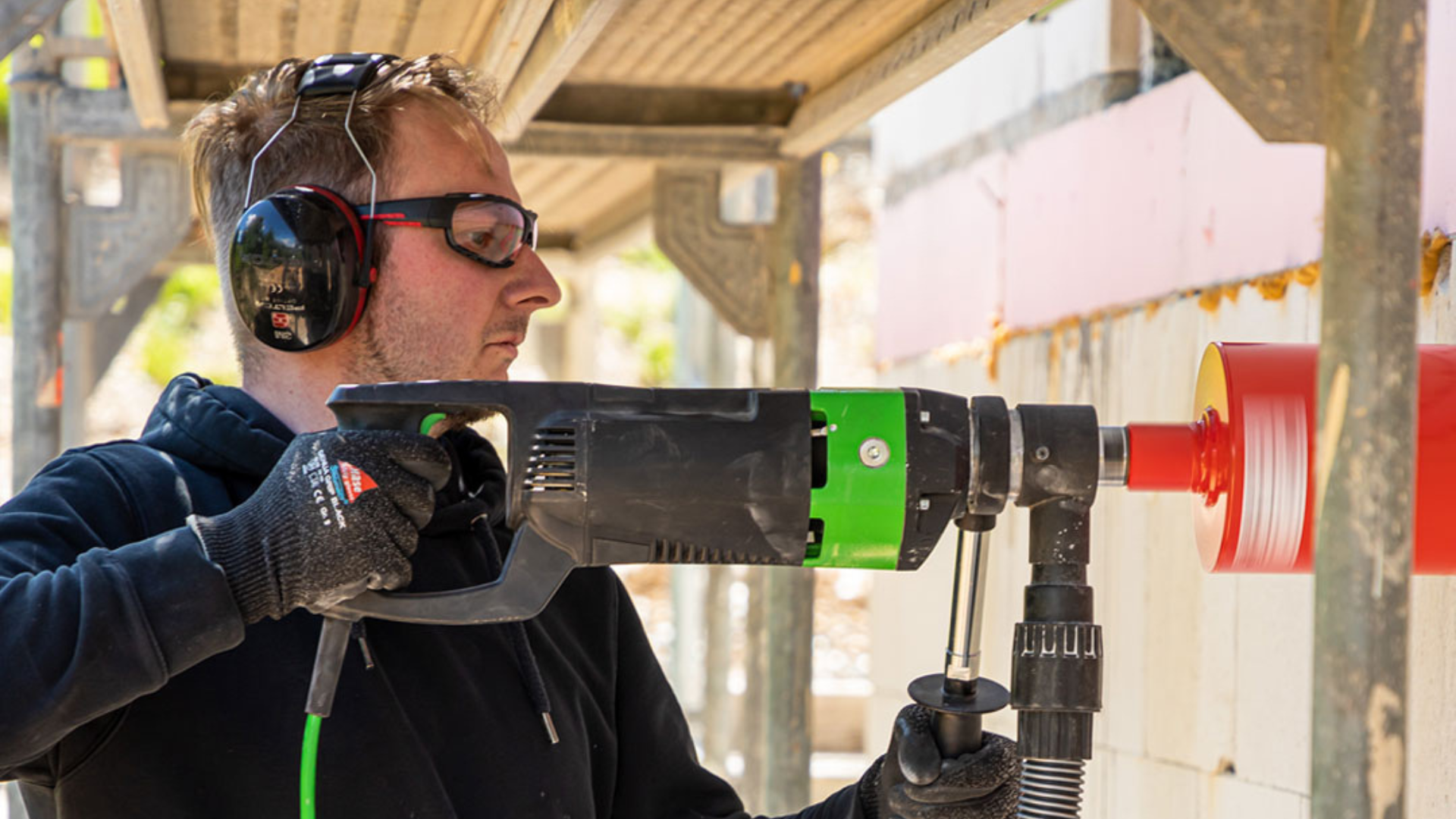
Diamond core drilling is used to create clean, accurate holes through brick, block, concrete and stone. It is common in plumbing, electrical, ventilation and heating work, as well as larger construction projects.
Choosing the right drill matters. A machine that is too small may struggle, overheat or wear out quickly. A drill that is unnecessarily large can make a straightforward job slower and more awkward.
The best setup should suit the material, hole diameter, drilling depth and working conditions. Get those decisions right, and the work becomes faster, cleaner and easier on the machine.
Start with the material
The first thing to consider is what you are drilling through.
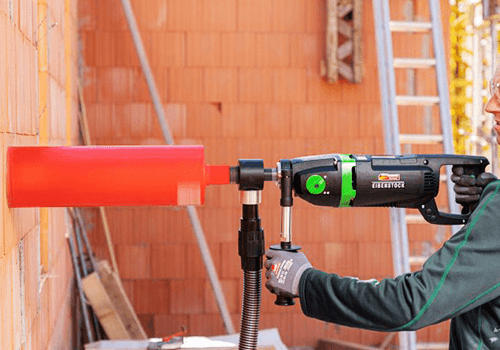
Brick, blockwork and similar masonry can often be drilled dry. This is particularly useful for electrical sockets, pipe openings, boiler flues and ventilation ducts.
Concrete and reinforced concrete usually require wet drilling. Water cools the diamond segments, reduces friction and helps clear waste from the hole. It can also improve drilling speed and extend the life of the core bit.
Natural stone varies. Softer stone may be suitable for dry drilling, while dense granite and engineered stone are more likely to need a wet setup.
Always check that both the drill and core bit are suitable for the material. Using the wrong combination can lead to overheating and excessive wear.
Consider the hole diameter
Hole size affects the power, speed and control required.
Smaller openings can often be completed with a handheld drill. These are suitable for many plumbing, heating and electrical installation jobs.
As the diameter increases, so does the resistance on the drill. Larger core bits need more torque and are harder to keep straight by hand. At that point, a drill stand or rig-mounted system is usually the better option.
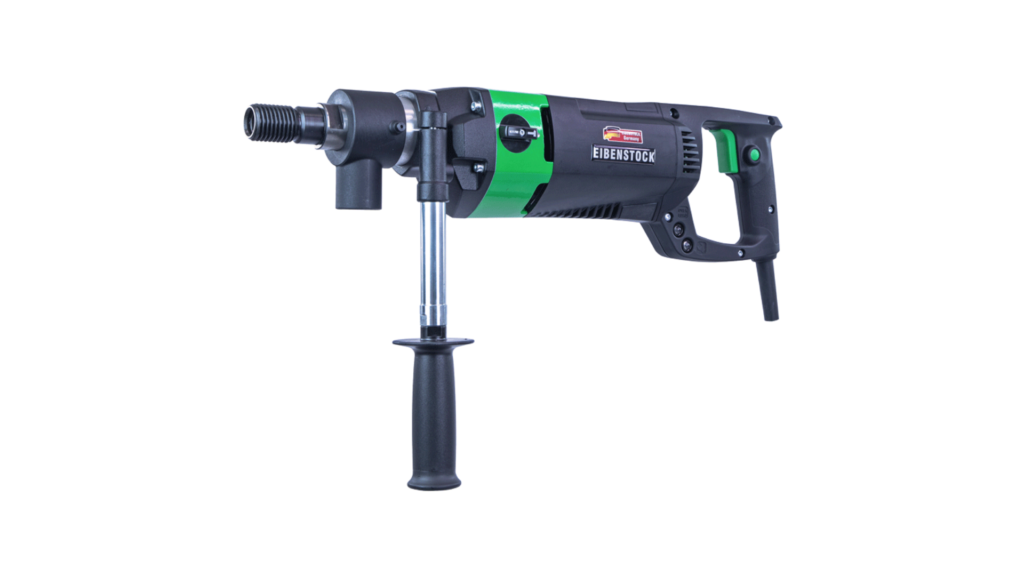
EIBENSTOCK offers compact handheld diamond drills as well as larger drilling systems for more demanding work. The important point is to choose a machine that works comfortably within the diameter you need.
Do not rely only on the maximum capacity listed for the tool. If you regularly work close to that limit, a larger machine may perform better and last longer.
Check the drilling depth
A shallow hole through a single brick wall is very different from a deep opening through reinforced concrete.
Deeper holes may require longer core barrels or extensions. They also need more careful alignment, as a small error at the start becomes more noticeable as the bit travels further into the material.
For deeper drilling, a securely mounted stand or drill rig helps keep the core straight and reduces the risk of it wandering.
It is also important to check for hidden pipes, cables and reinforcement before drilling. Scanning the area first can prevent expensive damage and unnecessary delays.
Wet or dry drilling?
Neither method is right for every job.
The best approach depends on the material being drilled, the working environment and the equipment available.
Dry drilling is often the simplest choice for brick and blockwork, particularly where water use is impractical. There is no water slurry to manage, making it a useful option for finished or occupied buildings. A suitable dust extraction system should still be used to control airborne dust and keep the working area clear.
Wet drilling is generally the preferred method for harder materials such as concrete, reinforced concrete and other dense substrates. The water helps keep the diamond core bit cool, extends tool life and removes slurry from the cut, making it the most effective option where conditions allow.
However, wet drilling is not always practical. Electrical works, indoor environments or domestic properties may make water management difficult or unsuitable. In these situations, dry drilling can still be a viable solution with the right equipment.
EIBENSTOCK’s Soft Percussion technology allows users to drill dry while still tackling demanding applications, including reinforced concrete. By combining dry drilling with controlled percussion action, these drills deliver improved performance where traditional dry drilling may not be suitable.
For contractors who need flexibility across various materials and environments, EIBENSTOCK offers a range of Soft Percussion diamond-core drills and drilling units designed to handle challenging applications where wet drilling is not possible.
ESD 162 8″ Soft Impact Dry Diamond Core Drill
DSE 162 2 Speed Dry Soft Impact Diamond Core Drilling Unit
DSE 200 2 Speed Soft Impact Wet/Dry Diamond Core Drilling Unit
Look beyond motor power
Wattage is important, but it is not the only thing that determines performance.
Core drilling depends heavily on torque and speed. Smaller bits usually run at higher speeds, while larger bits need slower speeds and more turning force.
A multi-speed gearbox allows the drill to be matched more closely to the core diameter. This helps improve cutting performance and reduces strain on the motor.
EIBENSTOCK diamond core drills may also include features such as soft start, electronic speed control, mechanical clutches and overload protection. These features help the machine start smoothly and provide protection if the bit catches or becomes stuck.
Before starting work, check that the available power supply is suitable for the machine. Extension cables should also be rated for the load and the conditions on site.
Handheld drill or drilling rig?
Handheld drills are quick to set up and suitable for smaller holes in brick and masonry. They are a practical choice for everyday electrical, plumbing and heating work.
A drilling rig offers more stability. It helps keep the drill aligned, reduces strain on the operator and allows steady pressure to be applied throughout the cut.
Rig-mounted drilling is generally the better choice for reinforced concrete, larger diameters, deeper holes and repeated drilling.
The stand must be fixed securely using the correct anchoring or vacuum system. If it moves during drilling, the hole may become inaccurate and the core bit can be damaged.
Matching the drill to common jobs
For electrical sockets in brick or block, a compact dry drilling machine with dust extraction is usually sufficient.
Boiler flues and ventilation openings often require a larger dry core. Check the finished diameter of the duct and allow enough clearance for any sleeve or fitting.
Plumbing penetrations through concrete floors or structural walls are normally better suited to wet drilling. Larger or deeper holes should be completed using a drill stand.
For frequent site work, choose a machine that can handle the required diameter without constantly working at its limit.
Commonly asked questions
Can I use a diamond core drill on reinforced concrete?
Yes. Use a drill and core bit designed for reinforced concrete. Wet drilling is normally recommended because it keeps the bit cool and helps it pass through dense concrete and reinforcement. However, where wet drilling is not practical, diamond core drills with Soft Percussion technology can allow dry drilling through challenging materials, including reinforced concrete.
What size diamond core drill do I need?
Choose a machine that comfortably covers the hole diameter you need. If you regularly work near its maximum capacity, move up to a larger drill or rig-mounted system.
Is wet drilling better than dry drilling?
It depends on the material. Wet drilling is generally better for concrete, while dry drilling is often more convenient for brick and blockwork.
Can diamond core drilling be done by hand?
Smaller holes in brick and masonry can often be drilled by hand. Larger, deeper or more demanding holes are safer and more accurate with a drill stand.
Why has my diamond core bit stopped cutting?
The bit may be worn, glazed, overheated or unsuitable for the material. Incorrect drilling speed or poor removal of dust and slurry can also affect performance.
If the diamond segments have become glazed, a sharpening stone can help rejuvenate the cutting surface and restore the bit’s performance, helping extend its working life before replacement is required.
Practical tips before drilling
Mark the centre point clearly and check the drilling angle before starting. Apply light pressure at first so the core bit can establish a clean path.
Do not force the machine. Excessive pressure can cause the motor and core bit to overheat. If drilling slows down, check the speed setting, core bit condition, dust extraction or water flow.
Inspect the machine before each use. Look for damaged cables, loose fittings, worn segments and blocked extraction or water connections.
Once the job is finished, clean the drill, core bit and stand before storing them in a dry place.
Choosing the right diamond core drill is not simply about buying the most powerful machine. It is about matching the drill, bit and setup to the work in front of you. A well-matched EIBENSTOCK system will drill more accurately and put less strain on the equipment.