Power Tool Buying & Knowledge Hub – Core Drilling Resource Centre

Share
Core drilling is widely used across construction, building services, civil engineering, and specialist installation work where accurate, controlled openings are required in materials such as concrete, reinforced concrete, brick, block, and stone.
For professional trades, choosing the right core drilling equipment involves more than selecting a machine with sufficient power. Material, hole diameter, drilling depth, drilling method, working environment and required accuracy all influence the most suitable setup.
This core drilling resource centre provides practical guidance to help professionals understand diamond core drilling, select appropriate equipment and achieve reliable drilling performance.
What Is Diamond Core Drilling?
Diamond core drilling is a cutting method that uses a diamond-tipped core bit to create a circular opening through a material. To decide on the right diamond core drill for your project, the following article explains in full detail & context.
How to Choose the Right Diamond Core Drill for Your Project
Unlike conventional drilling, which removes material using a pointed drill bit, core drilling cuts around the circumference of the opening. This makes it suitable for creating larger, accurate holes through mineral-based materials.
Common applications include:
- Plumbing and pipe penetrations
- Heating and ventilation installations
- Electrical installations
- Sanitary installations
- Construction and civil engineering
- Wall and ceiling openings
- Specialist building and renovation work
The correct drilling system depends on the material, the required hole diameter, and the working conditions.
Wet vs Dry Core Drilling
One of the most important decisions when planning a core drilling application is whether to drill wet or dry.
Wet core drilling
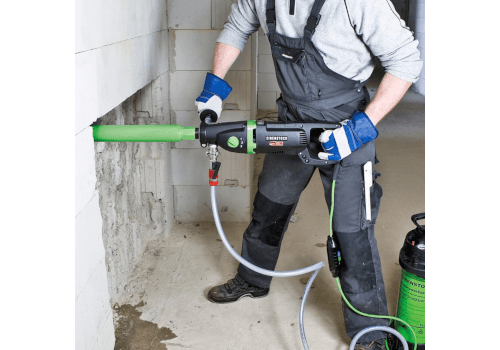
Wet core drilling uses a continuous water supply to cool the diamond segments and help remove drilling debris.
It is particularly suited to demanding applications involving concrete, reinforced concrete and other hard materials.
Key benefits include:
- Effective cooling of diamond segments
- Reduced heat build-up
- Efficient debris removal
- Consistent drilling performance
- Reduced airborne dust during drilling
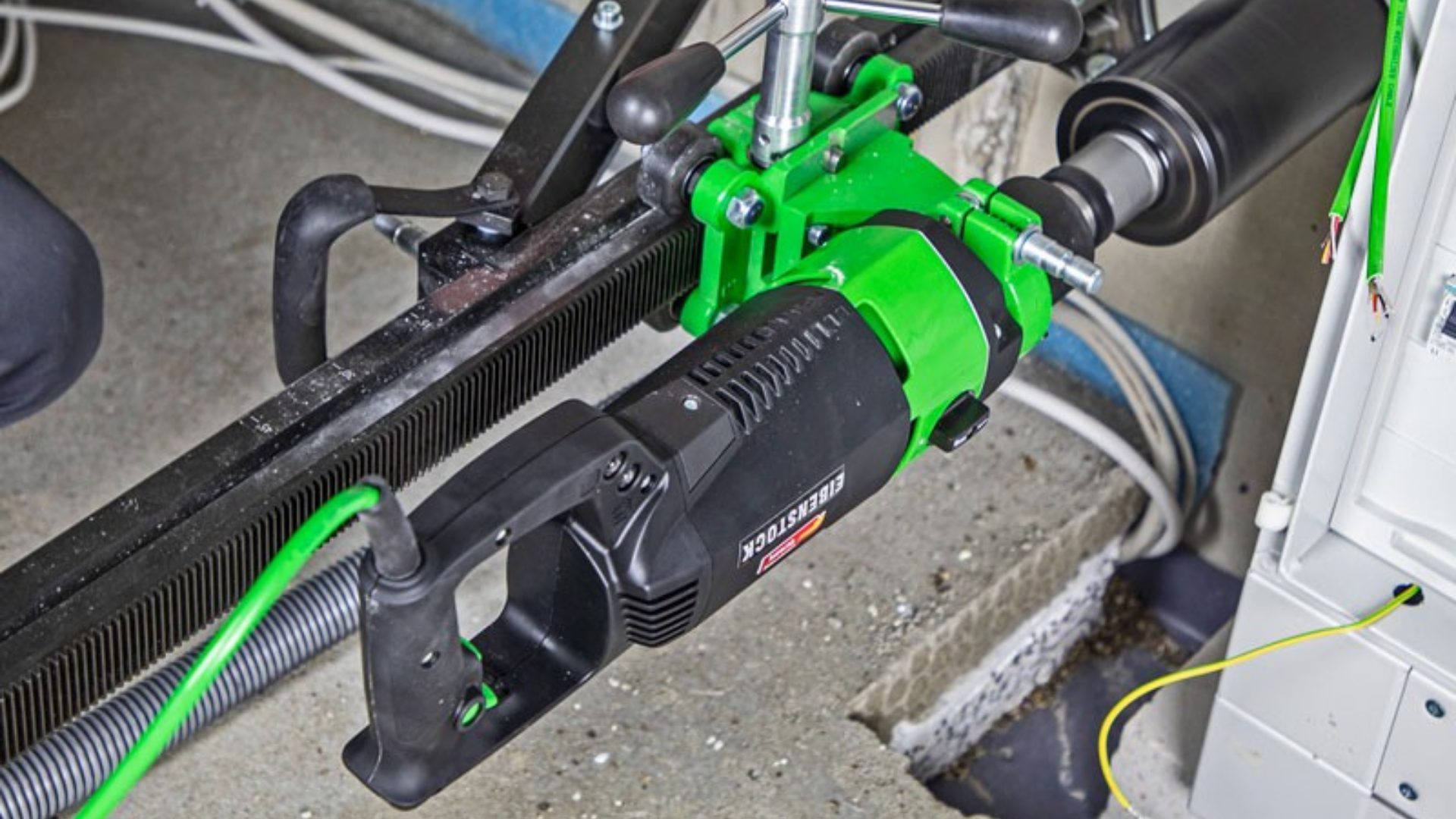
Wet drilling is commonly used for larger-diameter holes, deeper drilling and demanding concrete applications. A rig-mounted system can provide additional stability and control where accuracy is critical.
Dry core drilling
Dry core drilling operates without a continuous water supply and is commonly used where water is impractical or unsuitable.
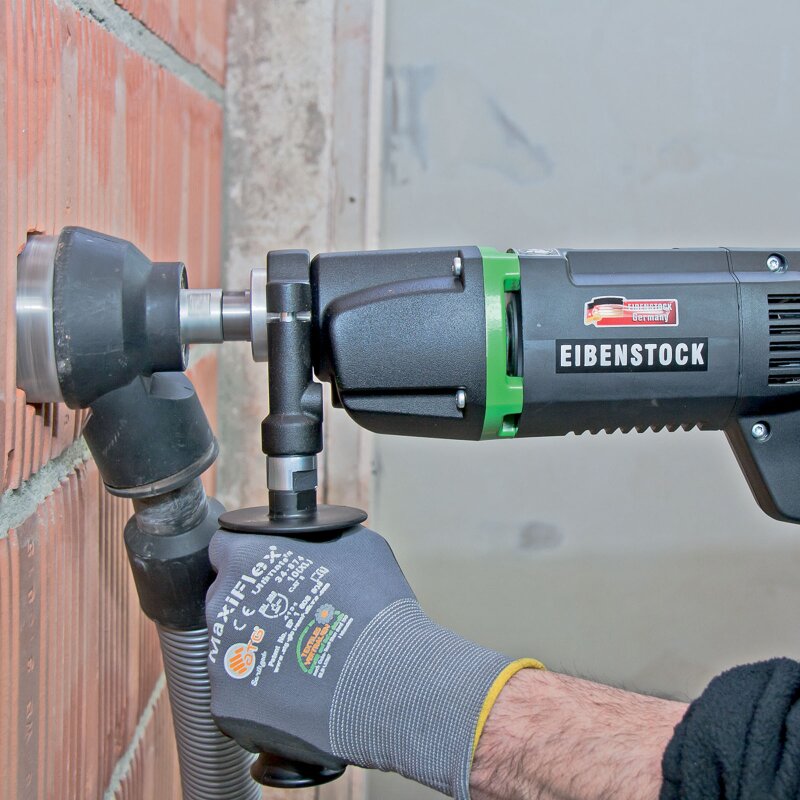
It can be particularly useful for brickwork, blockwork and masonry, as well as installation work inside completed or occupied buildings.
When combined with suitable dust extraction, dry drilling can provide an efficient solution while reducing water management and clean-up.
To learn about the importance of dust extraction and the impact it could have on your project, this article will be able to shed some light: Dust Extraction for Surface Preparation Tools
Which method should you use?
There is no single method that is best for every application.
As a general guide:
| Application | Typical approach |
| Brick and blockwork | Dry drilling is often suitable |
| Masonry | Dry drilling is often practical |
| Concrete | Wet drilling is commonly preferred |
| Reinforced concrete | Wet drilling is generally preferred |
| Large-diameter holes | Wet, rig-mounted drilling is often suitable |
| Deep drilling | Wet drilling can provide effective cooling |
| Internal work where water cannot be used | Dry drilling with dust extraction |
| Demanding dry applications | Specialist dry drilling systems may be appropriate |
EIBENSTOCK also offers specialist dry drilling systems using Soft Percussion technology for demanding materials where conventional dry drilling may be unsuitable.
How to Choose the Right Core Drill
The best core drill is determined by the application rather than by the highest power rating alone.
Material
Start by identifying exactly what you are drilling. Brick, block, masonry, concrete, and reinforced concrete offer varying levels of resistance and heat during drilling.
The machine and diamond core bit must both be suitable for the material.
Hole diameter
The required diameter has a major influence on machine selection.
Smaller installation openings may be suitable for handheld equipment, while larger diameters can require greater torque, power and stability. A rig-mounted system can provide better control for demanding applications.
Drilling depth
Deep drilling places additional demands on the cutting system and requires effective cooling and debris removal.
Wet drilling can be particularly useful for demanding deep-drilling applications because water provides continuous cooling and helps remove drilling waste.
Handheld or rig-mounted?
Handheld core drills provide mobility and quick setup and can be well-suited to smaller-diameter installation work.
Rig-mounted systems provide additional stability and controlled feed pressure, making them particularly useful for:
- Larger-diameter openings
- Deep holes
- Reinforced concrete
- Repetitive drilling
- Precision applications
Working environment
Site conditions can determine which drilling method is practical.
Consider:
- Is water available?
- Can drilling water be safely contained?
- Is the area occupied?
- Are there dust-control requirements?
- Is there sufficient space for a drill rig?
- Is dust extraction or water management required?
Selecting the complete drilling setup before work begins can help avoid unnecessary downtime and improve overall efficiency.
Choosing the Right Diamond Core Bit
The core drill is only one part of the drilling system. The diamond core bit must also be matched to the application.
Consider:
Material compatibility: Diamond segments are designed for particular material characteristics. A bit suitable for masonry may not provide the same performance in heavily reinforced concrete.
Diameter: Select a core bit that matches the required opening.
Drilling method: Check whether the bit is designed for wet drilling, dry drilling or a particular application.
Machine compatibility: Ensure the bit connection is compatible with the selected drilling machine or motor.
Drilling conditions: Material hardness, aggregate and reinforcement can all affect drilling performance and bit wear.
Using the correct combination of machine, core bit and drilling method is essential for consistent results.
Core Drilling Concrete and Reinforced Concrete
Concrete presents greater drilling resistance than many masonry applications, particularly where reinforcement is present.
For demanding concrete work, wet diamond core drilling is commonly used because water helps control heat and remove drilling debris.
Before drilling, professionals should establish the locations of reinforcement and, where required, potentially concealed services.
For larger diameters or demanding applications, a stable rig-mounted setup can provide improved control and accuracy.
Where wet drilling cannot be used, specialist dry drilling systems may provide an alternative for suitable applications.
Core Drilling Brick, Block and Masonry
Dry diamond core drilling is often well suited to brick, block, and masonry applications.
This makes it particularly useful for building-services trades, creating openings for:
- Pipes
- Cables
- Electrical installations
- Heating systems
- Ventilation
- Boiler flues
- Sanitary installations
A dry drilling setup can eliminate the need for water supply and collection, which can be particularly useful when working inside finished buildings.
Dust extraction should be incorporated where required to control airborne dust and maintain a cleaner working environment.
Dust Extraction and Water Management
Managing drilling debris is an important part of professional core drilling.
Dust extraction
Dry drilling can generate mineral dust, making effective extraction an important consideration.
A suitable industrial vacuum and compatible extraction system can help capture dust at source. Extraction equipment should be selected to work with the drilling machine and the application.
Water management
Wet drilling introduces water into the drilling process, so the work area needs to be prepared accordingly. Depending on the application, professionals may require a suitable water supply, water collection and suction equipment, or water recycling systems.
For applications where a controlled water supply is required, dust suppression water tanks can provide a practical solution for supplying water during drilling.
For larger or more demanding wet-drilling applications, water recycling equipment can help collect and reuse drilling water, reducing water consumption and helping to keep the working area more manageable.
Choosing the correct water management system helps create a more controlled, efficient and professional drilling operation.
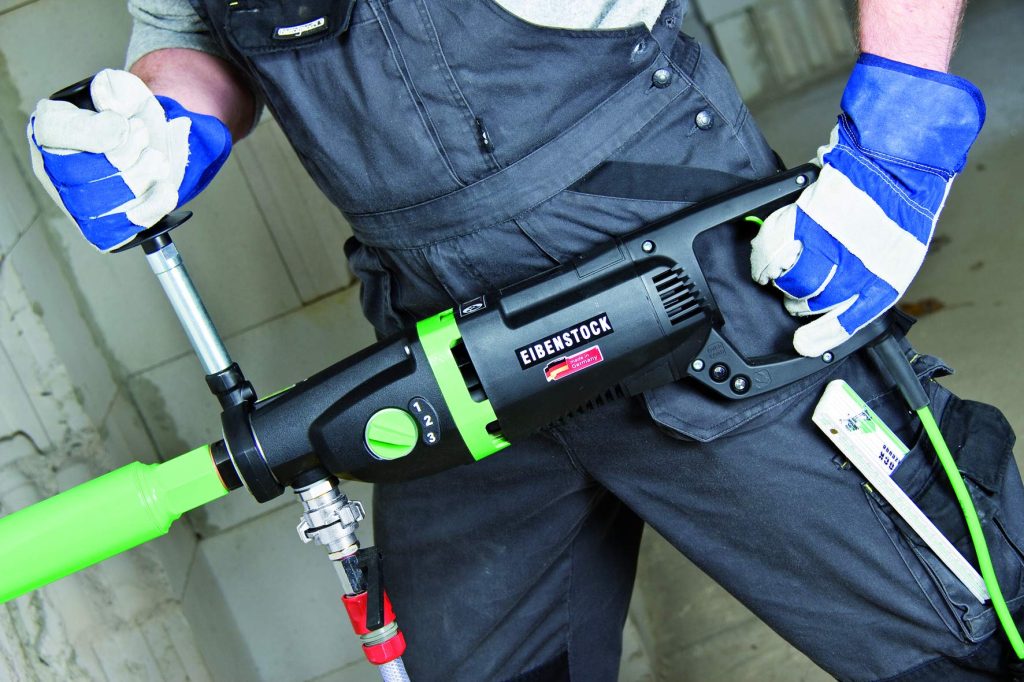
EIBENSTOCK Core Drilling Equipment
EIBENSTOCK develops professional power tools for industry and trade, with diamond core drilling forming an important part of its range.
Its core drilling solutions cover a range of materials, drilling methods, and applications, from compact handheld equipment to high-performance rig-mounted systems.
Dry diamond core drills
Dry diamond core drills are designed for applications where water is not required or cannot be used.
The EHD range, for example, provides professional dry drilling solutions for suitable masonry and installation applications.
Wet and dry diamond core drills
Wet and dry machines provide greater flexibility where professionals need to work across different materials and environments.
The ETN 162/3, for example, is designed for professional wet and dry drilling applications, including concrete, stone, brick, sand-lime brick and aerated concrete.
Rig-mounted drilling systems
For demanding applications, EIBENSTOCK offers drilling motors and compatible drill stands that provide greater stability and controlled drilling.
Rig-mounted systems can be particularly useful for larger diameters, deeper holes and applications where drilling accuracy is important.
Soft Percussion drilling
EIBENSTOCK’s Soft Percussion technology provides a specialised solution for selected hard-material dry-drilling applications.
This technology can be particularly useful where water cannot be used, but the material presents greater drilling resistance.
Core Drilling Accessories
Professional drilling performance depends on more than the drilling machine itself.
Depending on the application, a complete setup may include:
- Diamond core bits
- Drill stands
- Dust extraction equipment
- Industrial vacuum systems
- Water supply equipment
- Water collection equipment
- Water recycling systems
- Drill bit extensions
- Mounting and fastening accessories
Selecting compatible accessories helps create a complete drilling system matched to the application.
Core Drilling Safety
Professional core drilling should always be carried out in accordance with the machine manufacturer’s operating instructions and applicable site safety requirements.
Before drilling:
- Identify the material and construction of the area being drilled.
- Establish the location of potentially concealed services where required.
- Select equipment and accessories suitable for the application.
- Check the machine, core bit and connections before use.
- Secure the work area and establish an appropriate drilling position.
- Use the required personal protective equipment.
- Follow the manufacturer’s instructions for wet or dry drilling.
- Use appropriate dust extraction for dry drilling.
- Manage drilling water safely when wet drilling.
Always consult the operating manual for the specific machine being used and follow applicable workplace and site requirements.
Common Core Drilling Problems
Poor drilling performance does not always mean the machine lacks power.
Slow drilling
Possible causes include:
- Incorrect core bit selection
- Incorrect drilling method
- Excessive feed pressure
- Incorrect machine speed
- Worn diamond segments
- Material characteristics
- Insufficient cooling or debris removal
Excessive core bit wear
Bit wear can be affected by material, drilling technique, machine settings and whether the bit is being used for its intended application.
Overheating
Excessive heat can reduce drilling performance and accelerate wear. Wet systems provide continuous cooling, while dry systems require appropriate equipment, technique and dust/debris management.
Poor alignment
For larger or deeper holes, handheld drilling can become difficult to control. A suitable drill stand can provide greater stability and help maintain alignment.
Core Drilling Buying Checklist
Before selecting a core drilling system, consider:
- What material are you drilling?
- What diameter hole is required?
- How deep does the hole need to be?
- Is wet or dry drilling more appropriate?
- Can water be safely used and managed?
- What level of dust control is required?
- Is handheld drilling suitable?
- Would a drill rig provide better control?
- Which diamond core bit is compatible?
- What extraction, water or mounting accessories are required?
- How frequently will the equipment be used?
- Does the selected system meet the demands of the application?
The aim is to select a complete drilling system that matches the application rather than choosing a machine based on power or maximum drilling diameter alone.
Find the Right Core Drilling Solution
Choosing the right core drilling equipment starts with understanding the application.
Consider the material, hole diameter, drilling depth, working environment and required drilling method before selecting the machine, diamond core bit and supporting equipment.
From handheld diamond core drills for installation work to rig-mounted systems for demanding concrete applications, EIBENSTOCK provides professional drilling solutions designed for trade and industrial use.
Explore the EIBENSTOCK diamond core drilling range to find equipment suited to your application.