How to Reduce Hand-Arm Vibration When Using Heavy-Duty Drills and Grinders

Share
When you’re working with concrete, masonry, or stone, you need the right tools for the job. Heavy-duty core drills and diamond grinders are a must-have for construction professionals, contractors, and tradespeople. They help you get the work done, whether it’s core drilling through reinforced concrete, grinding down surfaces, or preparing floors for new work. But we know these tasks can be hard on your hands and arms. The vibrations from heavy-duty tools can travel up your arms, causing fatigue and strain over time. That’s why EIBENSTOCK puts ergonomics and vibration control at the heart of our design, helping reduce the impact on your hands and wrists so you can work longer, safer, and more comfortably.
Over time, excessive vibration exposure can lead to serious health issues, most notably Hand-Arm Vibration Syndrome (HAVS). Because of this, reducing vibration exposure is now a major focus of workplace safety and equipment design.
This guide explains what HAVS is, the tasks that create the most vibration, and practical ways to reduce risk using better tools, proper working techniques, and smart job planning.
What Is Hand-Arm Vibration Syndrome (HAVS)?
Hand-Arm Vibration Syndrome (HAVS) is a long-term health condition caused by regular exposure to vibration from handheld power tools.
It can take a long time, even months or years, for the problem to develop, but when it does, it affects the blood vessels, nerves, and muscles in your hands and arms. This usually happens from repeated exposure to something and can start slowly, getting worse over time.
Common symptoms include:
- Tingling or numbness in the fingers
- Reduced grip strength
- Loss of feeling in the hands
- Pain when working with tools
- “Vibration white finger” caused by restricted blood flow
It’s really important to prevent HAVS, or Hand-Arm Vibration Syndrome, because once it gets bad, it can be permanent. This is a big deal for people who regularly use heavy equipment like drills, grinders, and demolition tools. If you’re working with these kinds of tools, you need to take steps to protect yourself, because prevention is key.
Common Construction Tasks That Generate High Vibration
Some construction tasks naturally generate more vibration than others. Understanding which activities carry the highest risk can help workers plan how they use tools throughout the day.
| Task | Why Vibration Is High | Typical Tools Used |
| Core drilling reinforced concrete | High resistance from aggregates and steel reinforcement | Diamond core drills |
| Concrete grinding | Continuous surface contact creates sustained vibration | Concrete grinders |
| Surface preparation | Removing coatings, adhesives, or screed causes uneven resistance | Diamond grinding tools |
| Large diameter drilling | High torque is required to penetrate dense materials | Heavy duty rotary drills / high torque drills |
| Masonry drilling | Hard materials such as brick and stone create strong vibration feedback | Rotary hammer drills |
When you’re using tools for a long time, it can be really bad for you if you’re not careful. The tools can vibrate a lot, and that can hurt you if you’re not wearing the right protection.
Practical Ways to Reduce Hand-Arm Vibration
To reduce vibration, use the right equipment, work properly, and plan your tasks carefully. There are practical steps you can take on the job to make this happen, listed in the table below.
| Risk Factor | Practical Solution | Benefit |
| Prolonged tool use | Rotate operators or alternate tasks | Reduces daily vibration exposure |
| Poor tool design | Use tools with anti-vibration technology | Limits vibration reaching the operator |
| Excessive gripping force | Maintain a firm but relaxed grip | Reduces strain and vibration transfer |
| Poorly maintained tools | Regular servicing and inspection | Prevents increased vibration from worn parts |
| Incorrect accessories | Use high-quality diamond tools and balanced grinding discs | Improves smooth operation |
| Continuous grinding tasks | Schedule regular breaks | Reduces cumulative exposure |
By combining these practices, contractors can significantly reduce the risk of HAVS on-site.
How EIBENSTOCK Tool Design Helps Reduce Vibration
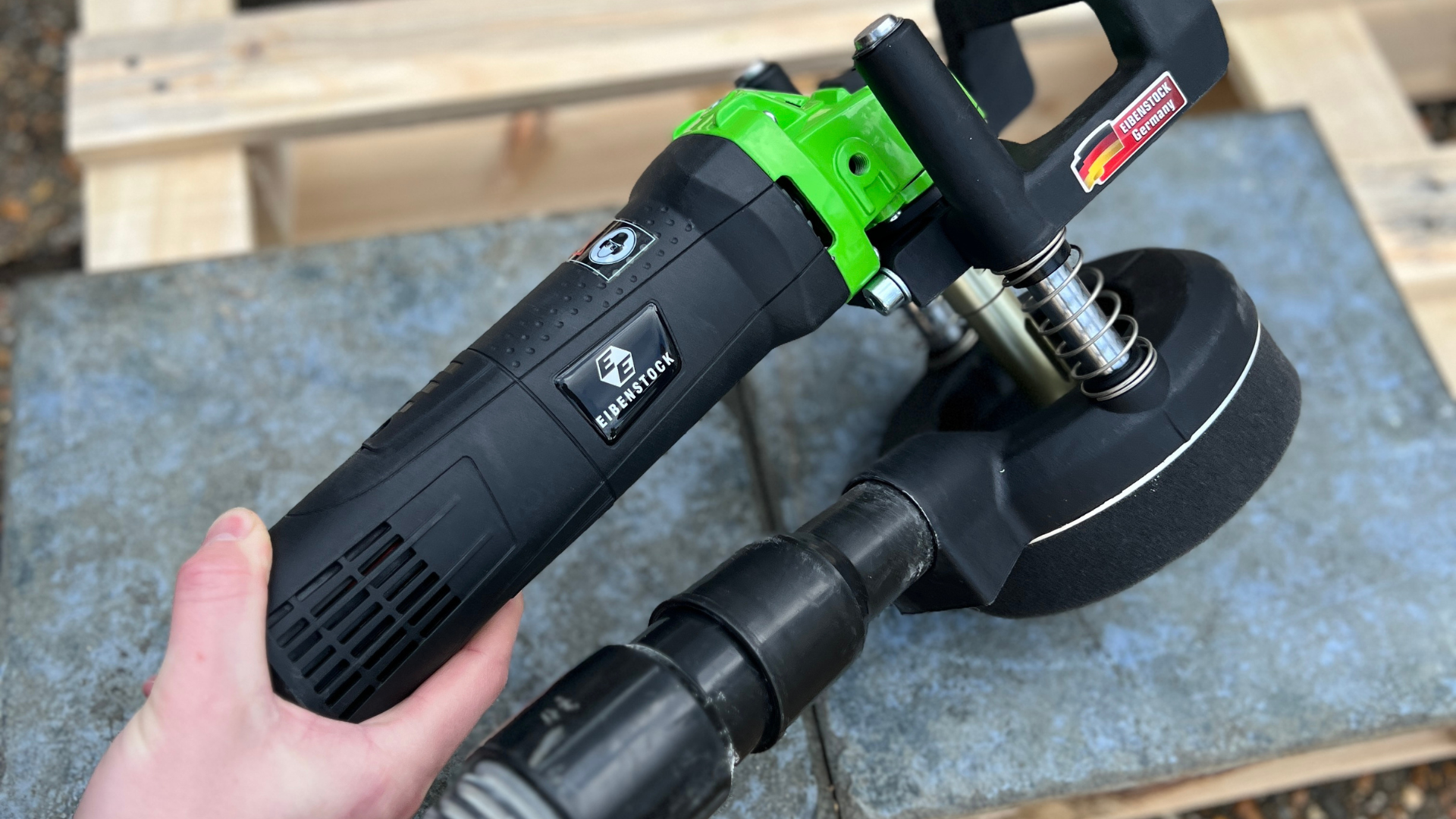
EIBENSTOCK tools are designed to minimise vibration while maintaining the power required for demanding drilling and grinding applications.
Anti-Vibration Design
Built-in vibration-reducing components help limit vibration transmitted to the handles during operation.
Ergonomic Handles
Comfortable, well-positioned grips improve control and reduce hand strain during extended use.
Balanced Construction
Having a balanced tool body is really important because it helps keep things stable. This means you can work for longer without getting tired, and it also makes the drilling or grinding process much smoother.
EIBENSTOCK Drill Rigs
Most EIBENSTOCK drill rigs are engineered with integrated anti-vibration rollers, designed to maintain drilling accuracy while significantly reducing vibration exposure for the user. This not only enhances control during operation but also helps protect against both immediate risks associated with core drilling and the long-term impact of Hand-Arm Vibration Syndrome (HAVS).
The EBW 1300 and USD 182 drill rigs take this a step further, featuring advanced designs that enable portable, non-physical mounting. This innovative approach enhances on-site safety while delivering a high-performance core-drilling experience. Although fixed rigs are often regarded as the benchmark for stability, these models combine portability with effective anti-vibration technology—keeping both the drill secure in use and the operator protected.
Grinder Trolley for EBS 180 H Grinder
While the EIBENSTOCK grinder trolley doesn’t feature dedicated anti-vibration components, it significantly enhances day-to-day usability by allowing the hand-held grinder to be securely mounted to a trolley. This setup reduces prolonged direct contact with vibrations, helping to minimise operator fatigue. It also promotes better working posture, easing strain on the knees and back, while offering improved control and consistency, particularly when working across larger surfaces for extended periods.
Why Investing in Low-Vibration Tools Matters
Reducing vibration exposure benefits both workers and businesses.
When operators use tools designed with vibration reduction in mind, they experience:
- Improved comfort during long tasks
- Reduced fatigue
- Better tool control and accuracy
- Lower risk of long-term injury
From a business perspective, safer equipment can also reduce:
- Workplace injury claims
- Lost productivity
- Worker downtime
Ultimately, investing in professional-grade tools that prioritise ergonomics and vibration control supports both safety and efficiency on site.
Protect Workers Without Compromising Productivity
Using the right tools and working smarter helps reduce the vibrations that affect your hands and arms when you’re drilling or grinding. This can make a big difference and help reduce the impact of these vibrations.
By selecting tools designed to reduce vibration, maintaining equipment properly, and planning tasks carefully, contractors can protect their workforce while maintaining productivity.The entire line of EIBENSTOCK tools, including diamond core drills, diamond grinders, polishers, power floats and more, is made to be comfortable and stable for operators. This helps professionals handle tough tasks and reduces the vibration they’re exposed to, making it easier for them to work.
When you’re a contractor or tradesperson, your tools are everything. You use them every day, and they can make or break your work. So, picking the right ones is crucial. It’s not just about getting the job done, but also about staying safe and working in a way that’s good for the long haul.