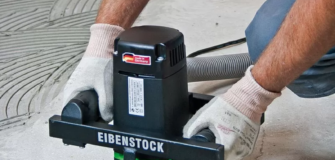
The Professional’s Guide to EIBENSTOCK Sanders: Applications, Techniques, and Trade Tips

Share
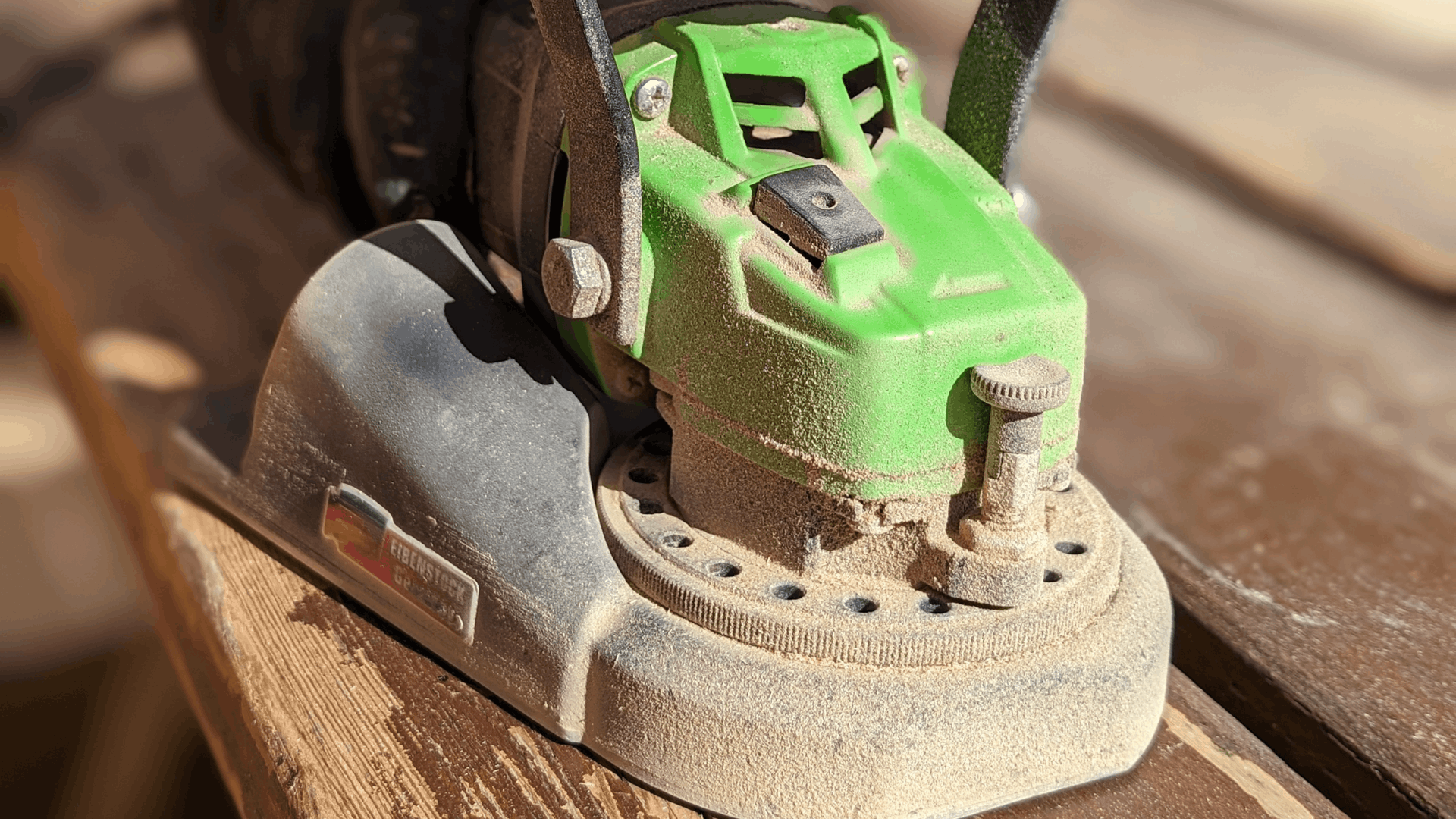
Professionals across construction, finishing, or refurbishment know that sanding is rarely the standout part of the job. It’s dusty, repetitive work, and tends to go unnoticed unless it’s done poorly. That’s exactly why it’s so important. Proper surface preparation sets the foundation for everything that follows, whether you’re painting, coating, levelling, repairing, or preparing a project for handover to a client who expects a high-quality finish.
That is why professional-grade equipment makes such a difference. EIBENSTOCK sanders are built for tradespeople who need consistency, control, and reliability on-site.
In this guide, we’ll explore where EIBENSTOCK sanders are used in everyday trade work, how to operate them effectively, and some practical tips that can help you get better results once you’re using the tool on site.
Why Professionals Choose EIBENSTOCK Sanders
A sander only really proves itself after a few hours on a demanding surface. That is where the difference between domestic-grade tools and professional machines becomes obvious.
EIBENSTOCK sanders are designed for heavier, longer, and more exacting use. They are made for jobs where speed matters, but finish quality matters just as much. On many sites, sanding is not simply about smoothing something off, but it is part of a bigger process of getting a substrate ready for the next stage, and if that stage goes wrong, it usually costs time, money, or both.
A good professional sander should help you keep control of the surface, not fight against it. It should stay steady under load, work cleanly with extraction, and remain comfortable enough to use without wearing you down too quickly. That is where EIBENSTOCK has built a strong reputation.
Types of Sanders
EIBENSTOCK sanders are designed to support a wide range of surface preparation and finishing tasks across construction, refurbishment, and trade environments. From removing coatings to achieving smooth, even finishes, each tool is built to deliver reliable performance on demanding site work.
Surface Shavers
Multi-surface shavers are highly effective for removing coatings and preparing substrates. Designed with ergonomic handles, they help reduce vibration, improving control and comfort during extended use.
Drum Sanders
The ESM 1310 from EIBENSTOCK is a 1300W variable-speed rotary drum sander and finisher designed for use with 100mm-wide abrasive drums. Drum sanders are suitable for a variety of applications, including sanding and texturing wood using aluminium oxide flap drums, as well as finishing and polishing steel and stainless steel with scotch-type abrasives. This makes it a versatile option for both woodworking and metal-finishing tasks that require consistent results.
Drywall Sanders
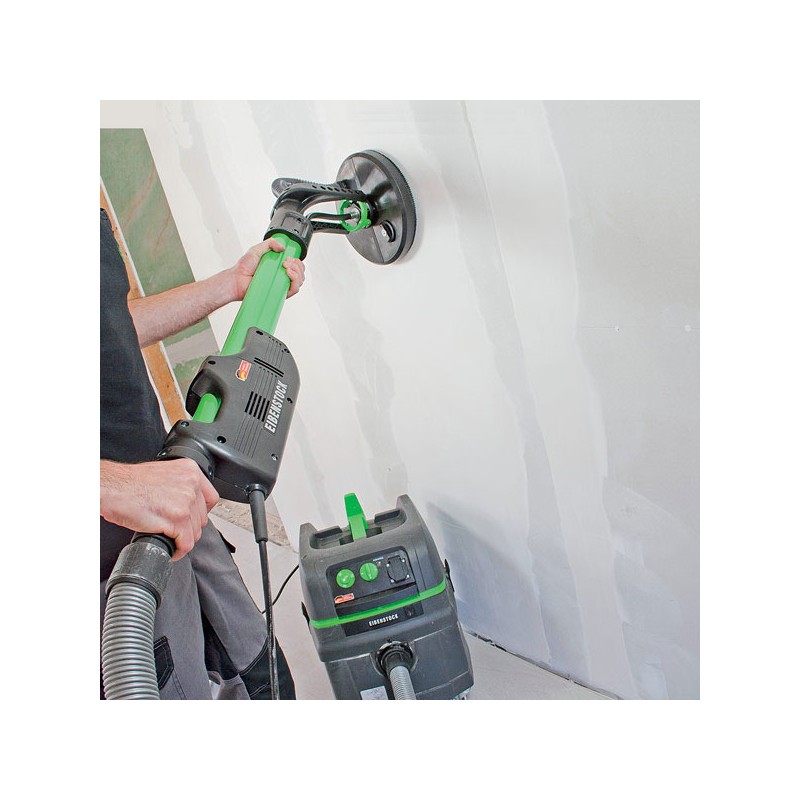
EIBENSTOCK offers a range of drywall sanders for efficient wall and ceiling finishing, including the EWS 400 insulation board sander and the ELS 225 BLlong-reach sander.
The EWS 400 is a 15-inch sander commonly used in insulation and external wall insulation (EWI) applications. Its flexible hood helps produce smooth, even surfaces on polystyrene and insulation boards, while the integrated dust extraction port helps reduce airborne dust and maintain a cleaner working environment.
The ELS 225 BL is a lightweight long-reach sander designed for overhead and large surface areas. It features a flexible, angled sanding head and a silicone rubber VacuGlide sealing lip, both of which improve surface contact and dust extraction efficiency.
Multi-Surface Sanders
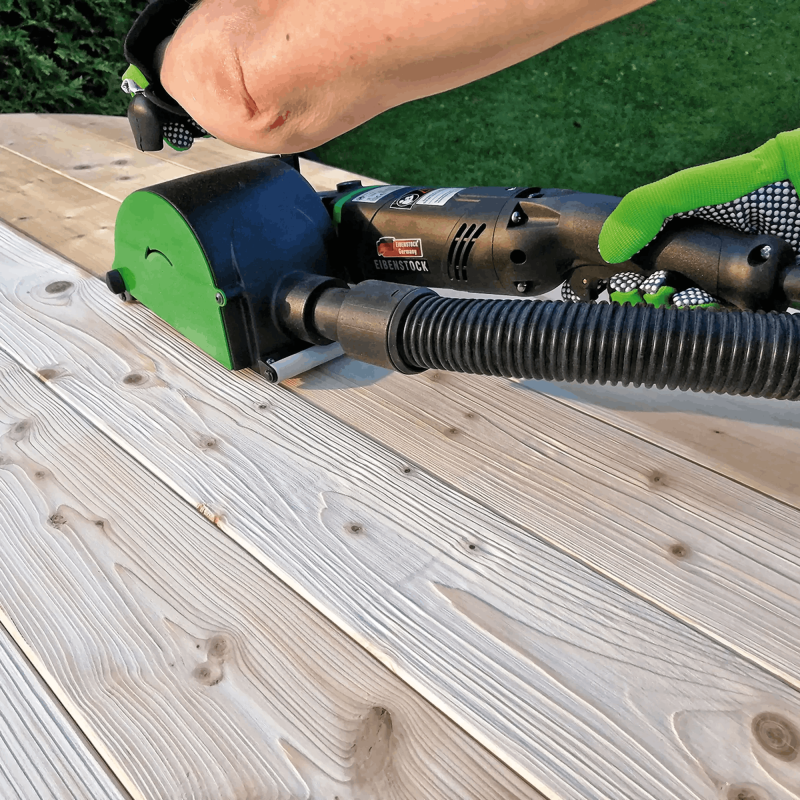
Multi-surface sanders are designed for versatility across a range of preparation tasks, including grinding and sanding walls, floors, and other large surfaces. They are particularly effective for heavy-duty applications such as removing coatings, preparing concrete, and sanding wooden floors and decking.
Where EIBENSTOCK Sanders Are Most Useful
Different jobs call for different approaches, but there are a few areas where these machines really come into their own.
Smoothing plaster and drywall
This is one of the most obvious uses. Fresh plaster and jointed drywall often need refining before decoration. Sometimes it is only a question of taking down high spots and blending edges. In other jobs, especially on larger wall and ceiling areas, the aim is to create a uniform finish across the entire surface.
A decent machine makes this process far more controlled. Instead of chasing ridges by hand and ending up with inconsistent pressure across the wall, a powered sander lets you work much more evenly. That usually means a better finish and less time spent going back over missed areas.
Preparing concrete and screed
Concrete and screed can be unforgiving. They quickly expose poor technique and can punish underpowered tools. Whether you are dealing with surface irregularities, laitance, or the need to key a floor before further application, sanding and grinding preparation work has to be approached properly.
This is where a professional machine earns its place. You need stable performance, especially when the substrate is tougher, and the amount of material being removed is less forgiving. Surface prep on concrete is not just cosmetic. It affects how well coatings, compounds, or finishes perform afterwards.
Removing old coatings or residues
Refurbishment work often comes with surprises. Adhesive remnants, flaky coatings, old paint layers, and patchy previous repairs can all turn a simple surface prep job into something much more involved.
Using a machine like an EIBENSTOCK sander helps speed up removal while still giving you more control than aggressive stripping methods. That matters when you want to remove the unwanted material without damaging what is underneath.
Fine-tuning surfaces before finishing
Not every sanding job is heavy-duty. Sometimes the aim is simply to bring the surface to a more refined standard before paint, plaster finish, decorative treatment, or another top layer goes on. In these situations, consistency matters more than aggression. A smooth, even surface saves time later and gives the final finish a far better chance of looking right.
Technique Matters
Many sanding problems do not come from the machine. They come from how it is being used.
One common mistake is forcing the tool. It is understandable. When a surface is stubborn, the instinct is to lean in harder and try to speed things up. In practice, that often creates more problems than it solves. Too much pressure can gouge softer materials, wear the abrasive more quickly, and make the machine harder to control.
A better approach is to let the machine do its job. Keep your movements steady, keep the head flat where possible, and trust the motor and abrasive to do the cutting.
Another issue is poor movement across the surface. Random passes usually lead to random results. You are far better off working in a measured pattern, slightly overlapping each pass as you go.
Corners and edges also deserve more patience than many people give them. These are the places where over-sanding happens fastest. A machine can flatten a broad area beautifully, but edges often need a lighter touch and sometimes a change of method altogether.
Choosing The Right Abrasive For The Job
The abrasive you fit matters just as much as the machine itself. Using the wrong grit can slow the whole job down or leave you with a finish that needs correcting.
A coarser grit makes sense when you need to remove material quickly or flatten obvious imperfections. A medium grit usually works well for general preparation. A finer grit is better when you are refining the surface and trying to leave it ready for the next stage.
Dust Control is Not Optional
Sanding creates fine dust that affects visibility, cleanliness, finish quality, and most importantly, health. A machine that works properly with dust extraction is not just more pleasant to use; It is a smarter and safer way to work.
Dust extraction helps keep abrasive cutting effective, prevents the surface from becoming recontaminated, and reduces cleanup afterwards. On occupied properties, commercial jobs, or high-spec residential projects, that clean-working approach is not just useful; it is often expected.
Less airborne dust, better visibility, and a cleaner process all make for more controlled work.
A Better Finish Starts Long Before The Finish Coat
EIBENSTOCK sanders are valuable because they help professionals take more control over that stage. They make it easier to prepare surfaces properly, work more efficiently, and maintain high standards even on demanding jobs.
For tradespeople, that matters. A good finish protects your reputation. It reduces rework. It makes handover smoother. And in many cases, it makes the next person on the job trust the quality of the work that has gone before.
If you are serious about surface preparation, the right machine is not a luxury. It is part of doing the job properly.