Wet vs Dry Core Drilling: Which Method is Best?

Share
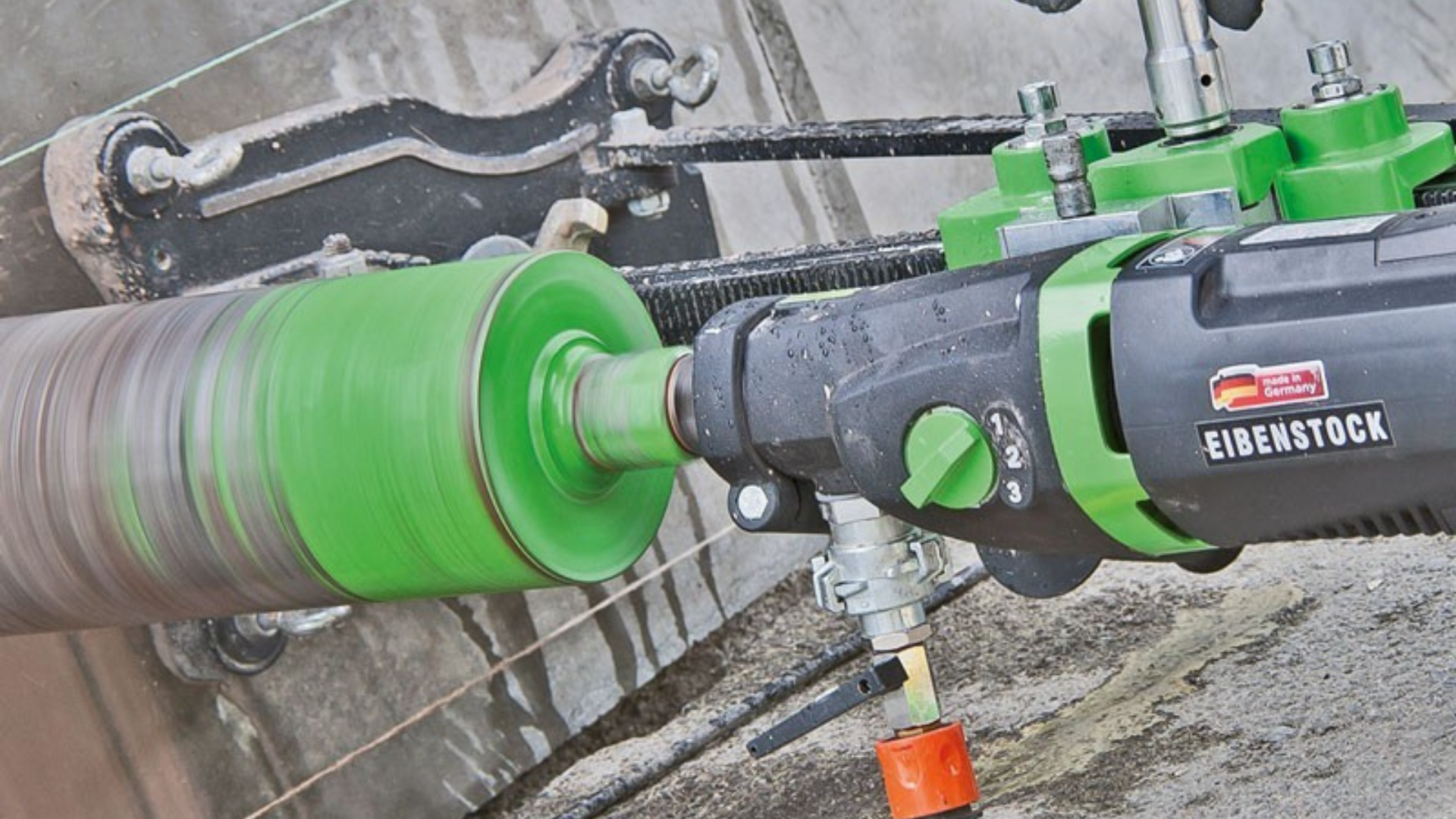
Core drilling is one of the most effective methods for creating clean, accurate openings through materials such as brick, block, concrete and stone. Used across plumbing, electrical, ventilation, heating and construction applications, diamond core drilling provides precise results where traditional drilling methods may not be suitable.
One of the biggest decisions when selecting equipment is whether to use wet or dry core drilling.
Both methods have advantages, and the right choice depends on the material, application, working environment and available equipment. Understanding the differences between the two methods can help professionals select the most suitable approach for each application, helping to optimise drilling performance, tool life and job efficiency.
What is wet core drilling?
Wet core drilling uses a continuous water supply during drilling. The water cools the diamond segments, reduces friction and helps remove drilling debris from the cut.
This makes wet drilling particularly effective when working with harder materials where heat build-up and resistance are greater.
Advantages of wet core drilling:
- Improved cooling of the diamond core bit
- Longer core bit life through reduced heat and wear
- Faster drilling in dense materials
- Cleaner cutting performance
- Reduced airborne dust
Wet drilling is commonly used for applications including:
- Reinforced concrete
- Structural concrete
- Large diameter holes
- Deep drilling applications
- Plumbing penetrations
- Ventilation and duct openings
For demanding concrete applications, a wet drilling system mounted on a stand or rig provides the stability and control required to achieve accurate results.
What is dry core drilling?
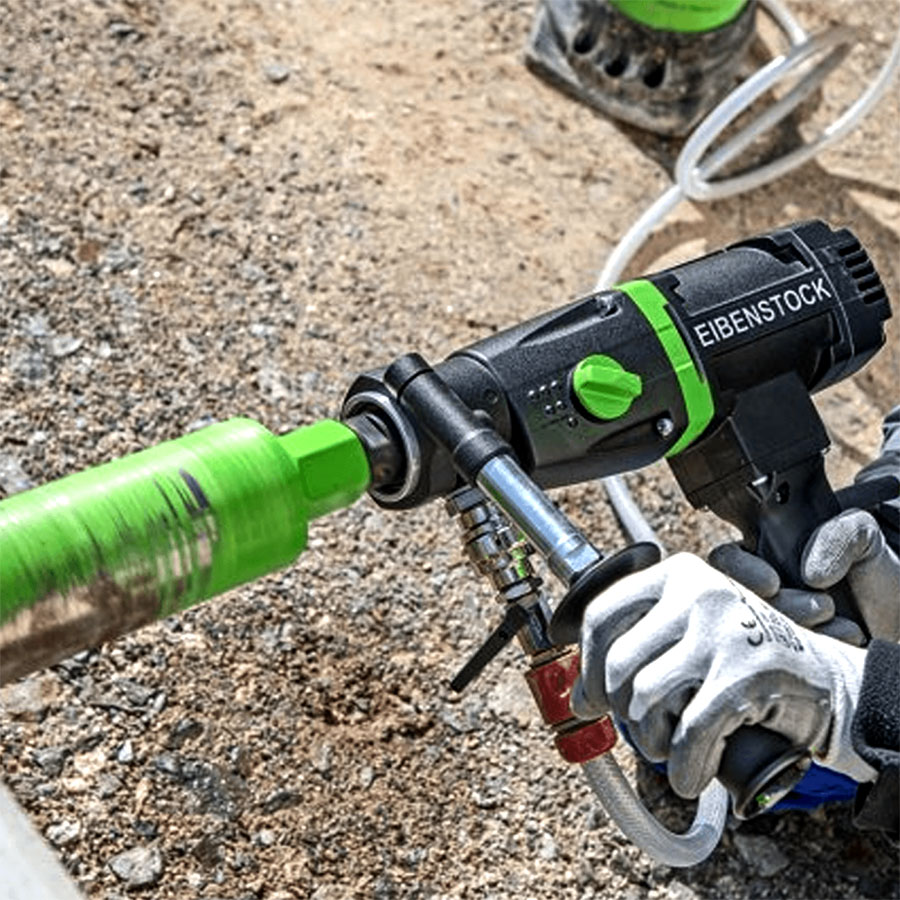
Dry core drilling removes the need for water by using specialised diamond core bits designed to operate without cooling fluid.
This makes dry drilling particularly useful where water management is difficult or where the working environment requires a cleaner, simpler setup.
Advantages of dry core drilling:
- No water supply required
- Easier setup and transport
- Suitable for occupied buildings and internal work
- Reduced clean-up after drilling
- Compatible with dust extraction systems
Dry drilling is commonly used for:
- Brickwork
- Blockwork
- Masonry
- Electrical installations
- Pipework openings
- Boiler flues
- Ventilation systems
When combined with effective dust extraction, dry drilling provides a practical solution for many everyday installation tasks.
Wet vs dry drilling: which is better?
Neither method is universally better. The correct choice depends on the application.
For concrete and reinforced concrete
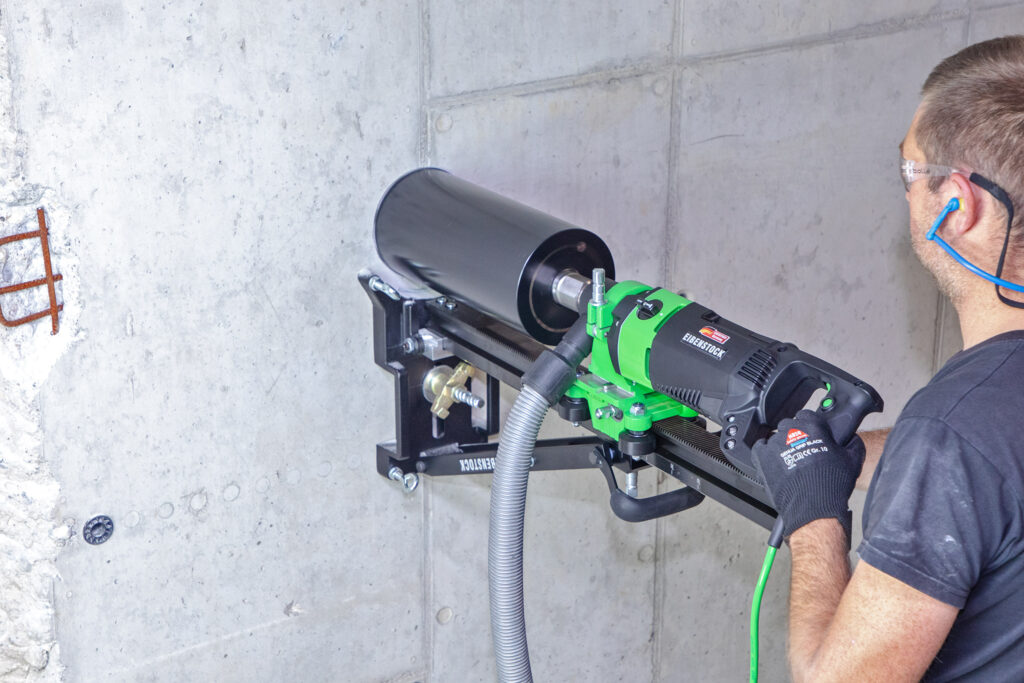
Wet drilling is generally the preferred option. Concrete offers greater resistance than softer masonry, generating more heat during drilling. Water helps maintain cutting performance and protects the diamond segments.
For larger diameters, deeper holes or reinforced concrete applications, wet drilling with a rig-mounted system provides greater control and accuracy.
For brick and blockwork
Dry drilling is often the more practical choice. Many plumbing, heating and electrical installations involve drilling through masonry, where water use may be inconvenient.
A dry diamond core drill combined with dust extraction allows contractors to complete the work efficiently while keeping the surrounding area cleaner.
For challenging dry applications
Some applications sit between traditional wet and dry drilling requirements.
EIBENSTOCK’s Soft Percussion technology allows professionals to drill dry through demanding materials, including reinforced concrete. By combining diamond drilling with controlled percussion action, these systems improve drilling performance where water cannot be used.
Factors to consider before choosing a drilling method
Before starting a core drilling project, consider:
Material being drilled
The substrate is the most important factor. Brick, block and softer masonry are often suitable for dry drilling, while concrete and reinforced concrete typically require wet drilling.
Hole diameter
Larger holes require more power and torque. As the diameter increases, a rig-mounted system may provide better control and reduce strain on both the operator and machine.
Drilling depth
Deep holes require consistent alignment and effective removal of drilling waste. Wet drilling is often better suited to longer drilling applications due to improved cooling and debris removal.
Working environment
Water availability, dust restrictions and site conditions all influence the best drilling method.
Dry drilling can be advantageous in finished buildings, while wet drilling may be the better choice on open construction sites where water management is easier.
Choosing the right EIBENSTOCK core drilling solution
EIBENSTOCK offers a range of professional diamond core-drilling solutions for various materials and applications.
From compact handheld dry drilling machines for electrical, plumbing and ventilation work to powerful wet drilling systems for concrete and larger openings, selecting the right equipment ensures better performance and longer tool life.
Key considerations include:
- Matching the drill to the material
- Selecting the correct core bit
- Choosing the appropriate drilling speed
- Using dust extraction or water management systems where required
For example, a few of our most popular and versatile core drills include
- EHD 2002 Professional Dry Diamond Core Drill: Designed with the needs of trade professionals in mind, offering enhanced power, precision, and safety features that make it one of the top performers in its class
- PLD 182.1 Wet & Dry Diamond Drill: A high-performance 8″ diamond drill featuring a compact pistol-grip design, ideal for both wet and dry coring through tough materials. With a powerful 2300W motor, a three-speed gearbox, and a durable mechanical clutch, it offers precision drilling for handheld or rig-mounted use.
- ETN 162 8” Wet & Dry Diamond Core Drill: Wet and dry diamond drill is designed for tackling hard and abrasive materials, making it ideal for both small and large-diameter holes. Powered by a robust 2,200W motor and a 3-speed gearbox, this versatile drill can be used wet with a water feed coupling or dry with an integrated dust extraction port.
Key Takeaways: Selecting the right drilling method
Wet and dry core drilling both provide reliable solutions when used correctly.
Wet drilling delivers maximum performance for demanding concrete applications, while dry drilling offers flexibility and convenience for masonry and indoor installation work.
The best method is the one that matches the material, hole size and working conditions. With the correct EIBENSTOCK diamond core drilling system, professionals can achieve accurate results while improving efficiency, safety and equipment lifespan.