Power Tool Buying & Knowledge Hub – Professional Mixing Equipment Guide

Share
Professional mixing is an important part of construction, building, renovation, finishing and installation work where materials need to be combined to achieve the correct consistency and performance.
Whether mixing mortar, plaster, render, tile adhesive, fillers, coatings, screeds, or other construction materials, selecting the right mixing equipment can significantly impact mixing quality, working efficiency, and operator control.
For professional trades, choosing a mixer involves more than selecting a machine with sufficient power. Material type, mixing volume, material consistency, batch size, mixing paddle, operating speed and working environment all influence the most suitable equipment.
This professional mixing equipment guide provides practical information to help professionals understand mixing technology, select appropriate equipment and achieve consistent mixing results.
What Is Professional Mixing Equipment?
Professional mixing equipment is designed to combine construction and building materials efficiently and consistently using a powered mixing machine and a suitable mixing paddle.
Unlike manual mixing, powered mixing provides controlled mechanical action that can help produce a more consistent material while reducing the physical effort required from the operator.
Professional mixers can be used for a wide range of applications, including:
- Mortar and masonry materials
- Plaster and render
- Tile and construction adhesives
- Fillers and compounds
- Screeds
- Cement-based materials
- Grouts
- Coatings
- Resin-based and specialist materials
- Other construction and renovation products
The correct mixer depends on the material being mixed, the required quantity, the desired consistency, and the conditions under which the work is being carried out.
How to Choose the Right Professional Mixer
The most suitable mixer is determined by the application, not by simply choosing the machine with the highest power rating.
Several factors should be considered before selecting equipment.
Material
Start by identifying exactly what material is being mixed.
Different materials can have significantly different viscosities, densities and mixing characteristics. A relatively fluid coating may require a different mixing action from a dense mortar or cement-based compound.
The mixer and mixing paddle must both be suitable for the material.
Mixing volume
The quantity of material being mixed is another important consideration.
Smaller batches may be suitable for compact handheld mixers, while larger quantities or heavier materials may require a more powerful machine to maintain consistent mixing performance.
Consider both the typical batch size and the frequency with which mixing will be carried out.
Material consistency
The material’s consistency affects the load on the mixer.
Low-viscosity materials generally require less mixing force, while dense or highly viscous materials can place significantly greater demands on the machine.
A mixer should therefore be selected according to the material’s characteristics rather than simply its container size.
Mixing speed
Different materials can require different mixing speeds and mixing actions.
A variable-speed mixer can provide greater control when working with materials that require careful incorporation or where excessive speed could introduce unwanted air into the mixture.
The correct operating speed should always follow the material manufacturer’s recommendations.
Mixing paddle
The paddle is an important part of the complete mixing system.
Different paddle designs produce different mixing actions and are intended for different material types and consistencies.
When selecting a paddle, consider:
- Material type
- Material viscosity
- Mixing volume
- Desired mixing action
- Container size
- Machine compatibility
Using the correct paddle can improve mixing efficiency and produce more consistent results.

Choosing the Right Mixing Paddle
The mixing paddle should be selected alongside the mixer rather than treated as a secondary accessory.
Different paddle geometries are designed to create different material movements during mixing.
Depending on the application, the mixing action may be designed to:
- Draw material from the bottom upwards
- Push material downwards
- Move material laterally
- Produce intensive mixing
- Reduce the introduction of air
- Mix thicker or more viscous materials
For example, a paddle suitable for lightweight or fluid materials may not provide the same performance when used with a dense mortar or heavily filled compound. The correct paddle can therefore have a significant effect on mixing performance. Before selecting a paddle, check the manufacturer’s recommendations for the material and mixer being used.
A very popular mixing paddle is our M3 Spiral paddle due to being the paddle of choice for professional tradespeople for mixing both low and medium viscosity levels ; with its thorough top-to-bottom mixing action and fatigue-reducing floating design.
Single-Speed vs Variable-Speed Mixing
One consideration when selecting a professional mixer is whether a fixed-speed or variable-speed machine is appropriate.
Single-speed mixers
Single-speed mixers provide a straightforward mixing solution for applications where the material and mixing process are relatively consistent.
They can be particularly suitable where:
- The same type of material is mixed regularly
- A consistent operating speed is appropriate
- Simple operation is preferred
- The application does not require significant speed adjustment
Variable-speed mixers
Variable-speed mixers allow the operator to adjust the mixing speed according to the material and application. This can provide greater control when working with different materials or when the mixing process requires a particular speed.
Variable-speed control can be particularly useful for:
- Different material consistencies
- Adhesives
- Plasters
- Fillers
- Coatings
- Materials where controlled mixing is important
The correct speed should always be determined according to the material manufacturer’s instructions.
Mixing Concrete, Mortar and Cement-Based Materials
Dense cement-based materials can place significant demands on mixing equipment. Mortar, concrete, and other cement-based products require sufficient mixing force to consistently incorporate the constituent materials.
When selecting equipment, consider:
- Material density
- Batch size
- Mixing time
- Required consistency
- Paddle design
- Mixer power
- Frequency of use
For heavier materials and larger batches, a powerful professional mixer with an appropriate paddle can help maintain mixing performance.
The mixing paddle should be selected specifically for the material rather than relying on a general-purpose paddle for every application.
Mixing Plaster and Render
Plaster and render require consistent mixing to achieve a workable material suitable for application.
The mixer should provide sufficient power while allowing the operator to maintain appropriate control over the mixing process.
Depending on the material, a suitable paddle can help achieve an even consistency while reducing the risk of unmixed material remaining in the container.
Professional mixing equipment can be particularly useful for tradespeople regularly preparing plaster and render on site, where repeatable mixing results and efficient preparation are important.
Mixing Tile Adhesive, Fillers and Compounds
Tile adhesives, fillers and other compounds can have different viscosities and mixing requirements.
Some products require relatively controlled mixing to achieve the manufacturer’s specified consistency, while thicker materials may require greater mixing torque.
When selecting equipment, consider:
- Product viscosity
- Recommended mixing speed
- Batch size
- Paddle type
- Mixing time
- Manufacturer’s instructions
A variable-speed mixer can provide useful control when working across different materials and applications.
Mixing Coatings and Lower-Viscosity Materials
Not all mixing applications involve dense construction materials.
Paints, coatings and other lower-viscosity products may require a different mixing action from mortar, plaster or cement-based products.
Using an unsuitable paddle or excessive mixing speed can affect the final material, including the amount of air incorporated during mixing.
For these applications, the mixing system should be selected in accordance with the material manufacturer’s recommendations.
How Much Power Does a Professional Mixer Need?
Mixer power should be considered in relation to the material and application rather than viewed as an indication of performance on its own.
A higher power rating does not automatically make a mixer the correct choice for every application.
Consider:
- Material density
- Material viscosity
- Batch size
- Mixing frequency
- Required mixing speed
- Paddle diameter
- Duration of operation
Dense materials and larger batches generally place greater demands on the machine.
A mixer should therefore provide sufficient power and torque for the intended application while remaining controllable and practical for the operator.
Mixing Paddle Diameter and Container Size
Paddle diameter and container size should be considered together.
A larger paddle can move a greater quantity of material, but it also places greater demands on the mixer.
When selecting a paddle, consider:
- Container dimensions
- Material volume
- Mixer power
- Material viscosity
- Required mixing action
- Manufacturer recommendations
Using a paddle that is too large for the mixer can overload the machine, while an undersized paddle may reduce mixing efficiency.
The complete mixer and paddle combination should therefore be matched to the intended application.
Mixing Technique and Operating Speed
Professional mixing performance depends not only on the equipment but also on how it is operated.
The operator should follow the material manufacturer’s instructions regarding:
- Water or liquid quantity
- Mixing order
- Mixing time
- Mixing speed
- Resting time
- Final consistency
As a general principle, the mixer should be operated in a controlled manner rather than simply at maximum speed.
Starting at a lower speed can help reduce splashing and uncontrolled movement of the material before increasing speed as appropriate.
The paddle should be moved through the material in accordance with the manufacturer’s recommendations to encourage consistent mixing throughout the container.
Mixing Dry Powder and Liquid Components
Many construction materials require dry powder to be combined with a specified quantity of liquid. Accurate measurement is important because the liquid-to-powder ratio can influence the material’s final properties. A professional mixing process should therefore consider:
- Preparing the correct quantity of liquid.
- Adding the material according to the manufacturer’s instructions.
- Selecting a suitable mixing paddle.
- Starting at an appropriate speed.
- Mixing for the specified period.
- Checking the final consistency before application.
The material manufacturer’s instructions should always take precedence over general mixing guidance.
Professional Mixing Equipment and Operator Control
Mixer design can influence how easily the operator can control the machine during use.
Professional equipment should be selected with consideration for:
- Ergonomic handling
- Weight
- Handle configuration
- Speed control
- Trigger or switch operation
- Machine balance
- Continuous working requirements
For tradespeople who use mixing equipment throughout the working day, handling and operator control can be just as important as power output.
A machine that is appropriately matched to the application can help make repetitive mixing work more manageable and efficient.
Mixing Equipment for Different Applications
There is no single mixer configuration that is suitable for every material.
As a general guide:
| Application | Typical equipment considerations |
| Plaster | Controlled mixing speed, suitable paddle |
| Render | Adequate power and appropriate paddle |
| Mortar | Higher mixing force and suitable paddle |
| Cement-based materials | Sufficient torque and robust construction |
| Tile adhesive | Controlled speed and suitable paddle |
| Fillers and compounds | Appropriate mixing action and speed |
| Coatings | Controlled speed and low-shear mixing where required |
| Large batches | Higher-capacity mixer and appropriate paddle |
| Dense materials | Higher torque and robust mixing system |
| Multiple material types | Variable-speed equipment can provide greater flexibility |
These are general guidelines. Always check the recommendations supplied by the material manufacturer.
EIBENSTOCK Professional Mixing Equipment
EIBENSTOCK develops professional power tools for industry and trade, including mixing equipment designed for demanding construction and renovation applications.
Our mixing solutions cover a range of material types and working requirements, from compact handheld mixers for installation and finishing work to more powerful equipment for demanding materials and larger mixing volumes.
Professional Handheld Mixers
Handheld mixers provide a mobile solution for tradespeople who need to prepare materials directly on site.
They can be suitable for applications including:
- Plaster
- Mortar
- Render
- Adhesives
- Fillers
- Construction compounds
- Other building materials
The appropriate machine should be selected according to the material, mixing volume and paddle requirements.
High-Performance Mixing Equipment
More demanding materials can require greater mixing power and torque.
High-performance professional mixers can be suitable for tradespeople working regularly with dense materials or larger batches where maintaining consistent mixing performance is important.
Variable-Speed Mixing
Variable-speed equipment can provide greater control across different materials and applications.
By allowing the operator to adjust the mixing speed, the machine can provide greater flexibility when switching between materials with different viscosities and mixing requirements.
Mixing Paddles and Accessories
EIBENSTOCK also provides compatible mixing accessories designed to form part of a complete professional mixing system.
Selecting the correct paddle alongside the mixer helps ensure that the equipment is matched to the intended material and application.
Trade Favourite Paddle Mixers
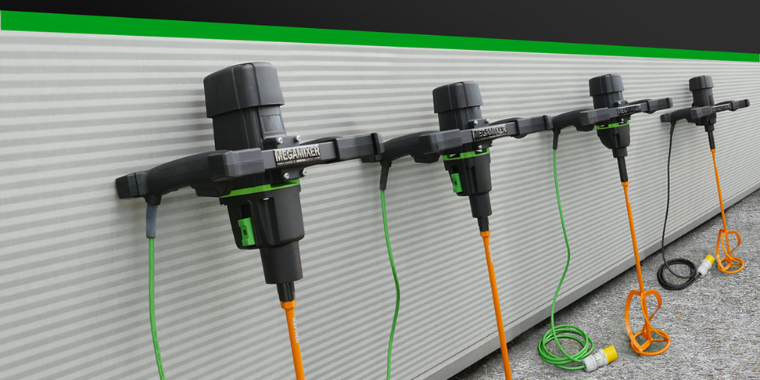
When it comes to reliable mixing on site, our range of EIBENSTOCK MEGAMIXERS is trusted by professional tradespeople for everything from everyday plaster and mortar mixing to large batches of demanding, high-viscosity materials.
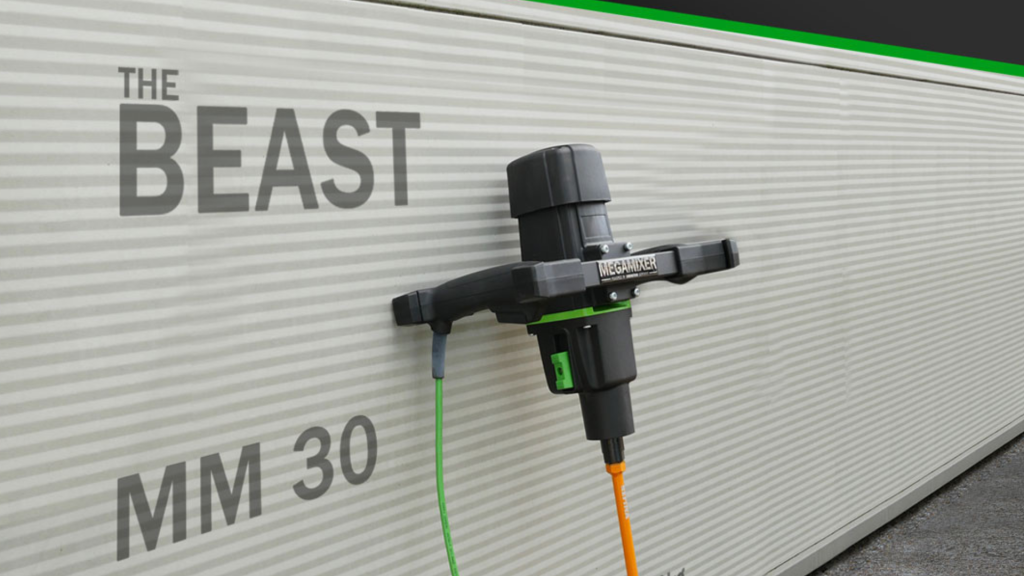
The MM 30/2 MegaMixer is our most popular all-round mixer, combining a powerful 1800W motor with a two-speed gearbox and high-torque mixing action. Supplied with an MR3 spiral paddle, it delivers fast, thorough and consistent mixing of plaster, render, screed, mortar and other demanding materials — including large four-bag mixes.
The MM 22 MegaMixer is a versatile medium-weight mixer designed for smaller and medium-sized batches. Its 1150W motor, two-speed gearbox and soft-start action make it ideal for mixing modern plasters, bonding, drylining adhesives, mortars, powders and epoxy coatings, while the ergonomic H-handle provides comfortable handling on site.
For large batches and very high-viscosity materials, the MZR 24 Twin Paddle MegaMIxer uses twin contra-rotating paddles to produce a powerful, thorough mixing action with reduced torque. It’s built for demanding materials such as heavy mortars, fibre-filled cements, pastes, putties, epoxies, bonding compounds and other specialist materials where consistent, thorough mixing is critical.

Mixing Equipment Accessories
A professional mixing setup can involve more than the mixer itself.
Depending on the application, a complete setup may include:
- Mixing paddles
- Paddle extensions
- Mixing buckets and containers
- Replacement components
- Power supply and extension equipment where appropriate
- Personal protective equipment
- Cleaning equipment
The compatibility of accessories should always be checked before use.
Using the correct paddle and accessories can help maximise the mixing machine’s effectiveness and ensure consistent results.
Cleaning and Maintaining Mixing Equipment
Cleaning equipment after use is an important part of professional mixing practice.
Residual material can harden around the paddle, spindle and other components, potentially affecting subsequent performance. After mixing:
- Follow the equipment manufacturer’s cleaning instructions.
- Remove material before it hardens where possible.
- Clean the paddle appropriately for the material used.
- Inspect the mixer and paddle for damage or excessive wear.
- Check connections and moving components.
- Store equipment in a suitable dry environment.
Different materials may require different cleaning procedures, so the material manufacturer’s instructions should also be followed.
Professional Mixing Safety
Professional mixing should always be carried out in accordance with the machine manufacturer’s operating instructions, the material manufacturer’s safety information and applicable site requirements.
Before mixing:
- Identify the material and review its instructions.
- Check the required mixing ratio.
- Select a suitable mixer and paddle.
- Check the machine, paddle and connections before use.
- Ensure the mixing container is stable.
- Secure the working area.
- Use the required personal protective equipment.
- Check that the machine is suitable for the intended application.
- Follow the manufacturer’s recommended mixing speed and procedure.
Particular care should be taken when working with materials that may generate dust during preparation or contain substances requiring specific handling precautions. Always consult the relevant safety data and operating instructions for the material and equipment being used.
Common Mixing Problems
Poor mixing performance does not always mean that the machine lacks power.
Inconsistent material
Possible causes include:
- Incorrect mixing ratio
- Insufficient mixing time
- Incorrect paddle selection
- Incorrect mixing speed
- Material not being incorporated from the bottom or sides of the container
- Batch size exceeding the recommended capacity
Mixer slowing down
Possible causes include:
- Material being too viscous
- Batch size being too large
- Paddle diameter being unsuitable
- Excessive mixing load
- Incorrect machine selection
Excessive splashing
Possible causes include:
- Starting at excessive speed
- Incorrect paddle selection
- Paddle being positioned incorrectly
- Container being unsuitable for the application
Starting at an appropriate speed and increasing it gradually can help provide greater control.
Excessive air incorporation
Some materials can be negatively affected by excessive air being introduced during mixing.
Possible contributing factors include:
- Incorrect paddle design
- Excessive mixing speed
- Incorrect mixing technique
For materials where air incorporation is important, the manufacturer’s mixing recommendations should be followed closely.
Paddle wear
Paddle wear can be affected by:
- Material type
- Frequency of use
- Mixing technique
- Abrasive materials
- Cleaning and maintenance
- Operating conditions
A damaged or excessively worn paddle should be replaced where required.
Professional Mixing Buying Checklist
Before selecting professional mixing equipment, consider:
- What material are you mixing?
- How viscous or dense is the material?
- What quantity needs to be mixed?
- How frequently will the equipment be used?
- What mixing speed does the material manufacturer recommend?
- Is variable-speed control beneficial?
- Which mixing paddle is appropriate?
- What paddle diameter is suitable?
- What container size will be used?
- Does the mixer provide sufficient power and torque?
- Are compatible accessories available?
- What cleaning and maintenance will be required?
- What safety precautions apply to the material?
- Does the selected equipment meet the demands of the application?
The aim is to select a complete mixing system that matches the material and working conditions rather than choosing a machine based solely on power or maximum paddle diameter.
Find the Right Professional Mixing Solution
Choosing the right mixing equipment starts with understanding the material and application.
Consider the material type, viscosity, batch size, required mixing speed, mixing paddle and working environment before selecting the machine and supporting accessories.
From compact handheld mixers for plaster, adhesives and finishing materials to powerful professional equipment for demanding mortar and cement-based applications, EIBENSTOCK provides mixing solutions designed for professional trade and industrial use.
Explore the EIBENSTOCK professional mixing range to find equipment and accessories suited to your application.